The first time you go looking for journaling supplies, you will find an enormous amount of advice, and most of it is about buying things. Notebooks with thick cream paper. Notebooks with printed prompts. Pens in eleven nib sizes, sticker sets, seasonal washi tape, little brass rulers, and an entire category of accessories that promises to make writing easier. Some of it is lovely. Very little of it is necessary.
Here is the honest version: you need something to write on, something to write with, and a way to keep the two of them together long enough for a habit to form. Everything past that is a preference. What follows is the short list — seven items that earn their place, with notes on how to choose each one so you don't spend money on the wrong version of it.
1. A Notebook You Aren't Afraid to Ruin
The thing that stops most beginners isn't a lack of ideas. It's the feeling that the notebook is too nice to waste on a boring Tuesday. An expensive linen-bound journal creates a small pressure to be worthy of it; a plain exercise book doesn't. If beautiful paper genuinely makes you want to write, buy it. If it makes you hesitate, buy something cheaper and keep the nice one for later, when writing has become routine.
Choose the size by where you actually write
A5, roughly half a sheet of printer paper, fits in most bags and still gives you room for a real entry. A4 suits people who make lists, diagrams and sprawling mind maps. A pocket notebook is only useful if you genuinely carry it — a journal that stays on the shelf is a nice object, not a habit.
Match the ruling to how you think
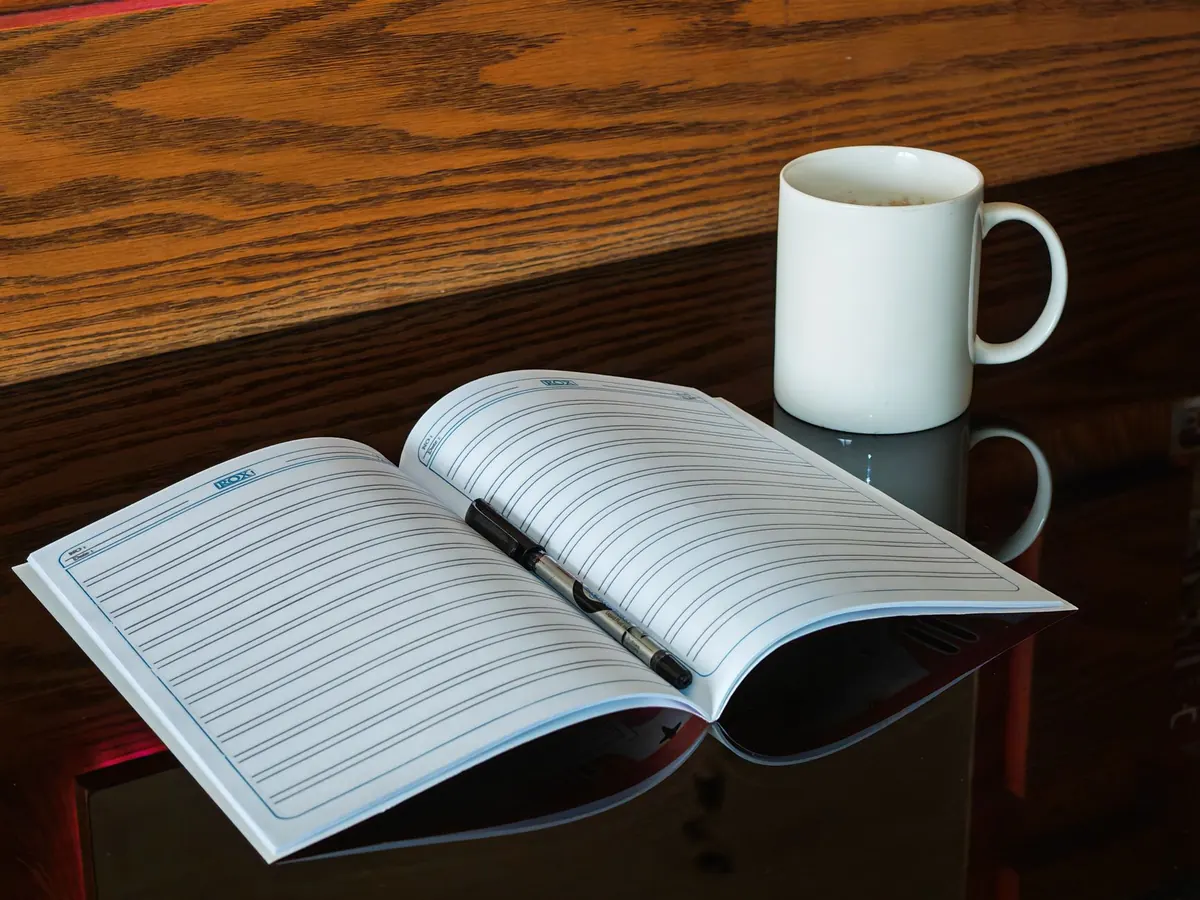
Lined pages suit long-form writing and keep handwriting tidy. Dotted pages are flexible: good for bullet-style lists and quick sketches, slightly busy behind dense text. Blank pages are wonderful for people who draw and quietly intimidating for everyone else. Check the spacing as well — 7mm lines are comfortable for most adult handwriting, while 5mm feels cramped after a paragraph.
Look at the binding
Lay-flat or stitched bindings cost a little more and are worth it, because you can write on both sides of a page without wrestling the spine. Spiral notebooks are cheap and perfectly good, though the wire snags on bag linings. If you write with your left hand, open the notebook flat in the shop and try a line near the gutter before you commit.
2. A Pen That Makes Writing Feel Easy
You almost certainly own a usable pen already. Start there. The upgrade matters only if the pen you have is actively unpleasant: skipping ink, a barrel that digs into your fingers, a cap that won't stay on. Writing by hand is slower than typing, and a pen that fights you makes the slowness feel like a chore.
Ink and drying time
Gel pens are smooth and dark, but many of them smudge for a second or two, which is fatal if you write with your hand resting on the line above. Fine-tip ballpoints are unglamorous and never skip. If you are left-handed, drying time is the deciding factor, not colour depth. Test any pen on the back of your hand before you buy a set of three.
Grip and weight
A very thin barrel will cramp your hand after a page or two. If that happens, move to something slightly thicker with a soft grip section. A heavier pen feels satisfying for short entries and tiring for long ones. And leave the fountain pen for later — it's a pleasure, but it needs paper that can take wet ink, which is a second purchase you don't need to make yet.
3. A Second Pen in a Contrasting Colour
This one isn't decoration. A second colour gives you a way to date entries, mark a line you want to return to, note a mood in the margin, or flag something you wrote that turned out to be wrong. Filled journals are hard to navigate; a single contrasting colour is the cheapest indexing system there is. Keep it to one extra colour — black and red, or blue and black — so the page stays readable.
4. Page Flags or Sticky Notes
Flags do two jobs. They hold the thought you don't want to interrupt an entry for: a phone call to make, a question to sit with, a name you keep forgetting. And they mark pages worth finding again. Write a word on the flag itself, not just "important" — future you will not remember what the flag meant.
Narrow index tabs along the outer edge work well for sections you return to often, such as a reading log or a list of things you're saving for. Keep the pack inside the back cover so it travels with the notebook rather than living in a drawer.
5. Washi Tape or a Glue Stick
Journals get richer when things go into them: a receipt from a good lunch, a train ticket, a photograph, a leaf that fell on your walk. A glue stick is the cheapest way to do this and dries flat. Washi tape is forgiving, peels off most paper without tearing, and holds a photo in place until you decide where it belongs.
Skip both if you know you only ever want to write text. But most people find that pasting something in is the moment a journal stops being an exercise and starts feeling like theirs.
6. A Pouch, Case or Shallow Tray
Here is where beginner kits fall apart: not on the choosing, but on the scattering. If your pen is in the kitchen drawer and your notebook is under a pile of post, you will skip the session. One container — a zip pouch, a pencil case, or a small tray on the table where you sit in the evening — reduces setup to a few seconds.
Keep a spare pen in it. Keep the flags and tape in it too. The container doesn't need to be attractive; it needs to be the single place where the kit lives, so you never have to look for it.
7. A Simple Timer
Ten minutes of writing beats an hour you keep postponing. A kitchen timer or a phone timer set to ten minutes solves the two problems that stop beginners: not knowing when to start, and not knowing when they're allowed to stop. Knowing there's an end makes beginning much easier.
If you use your phone, turn it face down or leave it in another room once the timer is running, so the timer doesn't become a doorway to notifications. The session doesn't have to be productive. It only has to happen.
What You Can Safely Skip, For Now
None of the following are bad purchases. They're just answers to problems you don't have yet, and buying them early tends to make journaling feel more complicated than it is.
- Prompted journals and guided workbooks. Useful later, but as a first notebook they can make each page feel like an assignment you can fail.
- Fountain pens, converters and bottled ink. A lovely hobby, and a demanding one. It also pushes you toward heavier paper.
- Brush pens, markers and lettering sets. Hand lettering is its own skill, with its own practice time.
- Sticker packs and themed tape collections. Buy one roll you like, not a set of twelve. Collections create the urge to use everything at once.
- Journal covers, desk mats and subscription boxes. Pleasing objects that don't add a single written page.
- A second app or digital planner. Digital journaling is fine on its own, but running two systems at once is how beginners end up using neither.
The right moment to buy a supply is when you've hit the specific annoyance it fixes: your hand hurts, your photos fall out, you keep losing your page. Until then, the money is better spent on paper.
A Five-Minute Setup to Start Tonight
You don't need a better notebook. You need twenty minutes and a page you're allowed to fill badly.
- Put the notebook, two pens, flags and tape into one container, and leave it where you sit in the evening.
- Write the date on the first page and one sentence about why you're starting. Not a mission statement — a sentence.
- Set the timer for ten minutes and write until it goes off. No crossing out, no rereading.
- Close the notebook and put it back in its place. That last step is what makes tomorrow easier.
Replace a supply when it's worn out or when the same problem keeps repeating, not when a new version appears online. A notebook that's half full is worth more than three that are empty, and the only real test of whether a pen suits you is a page of your own handwriting in your own journal.
One last note: journaling is a good habit, not a treatment. If writing about a difficult stretch stirs up more than you can settle on the page, talking it through with a qualified professional is a sensible next step — no notebook required.
Photo: Firmbee / Pixabay