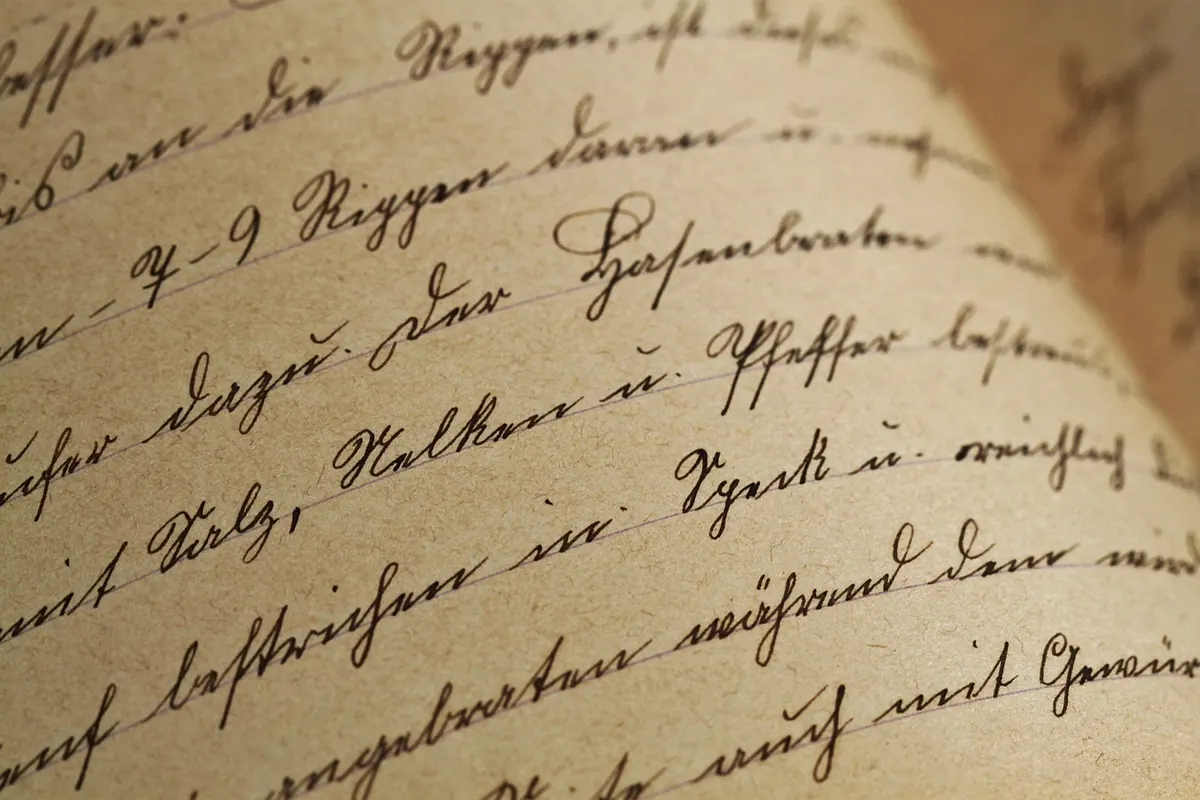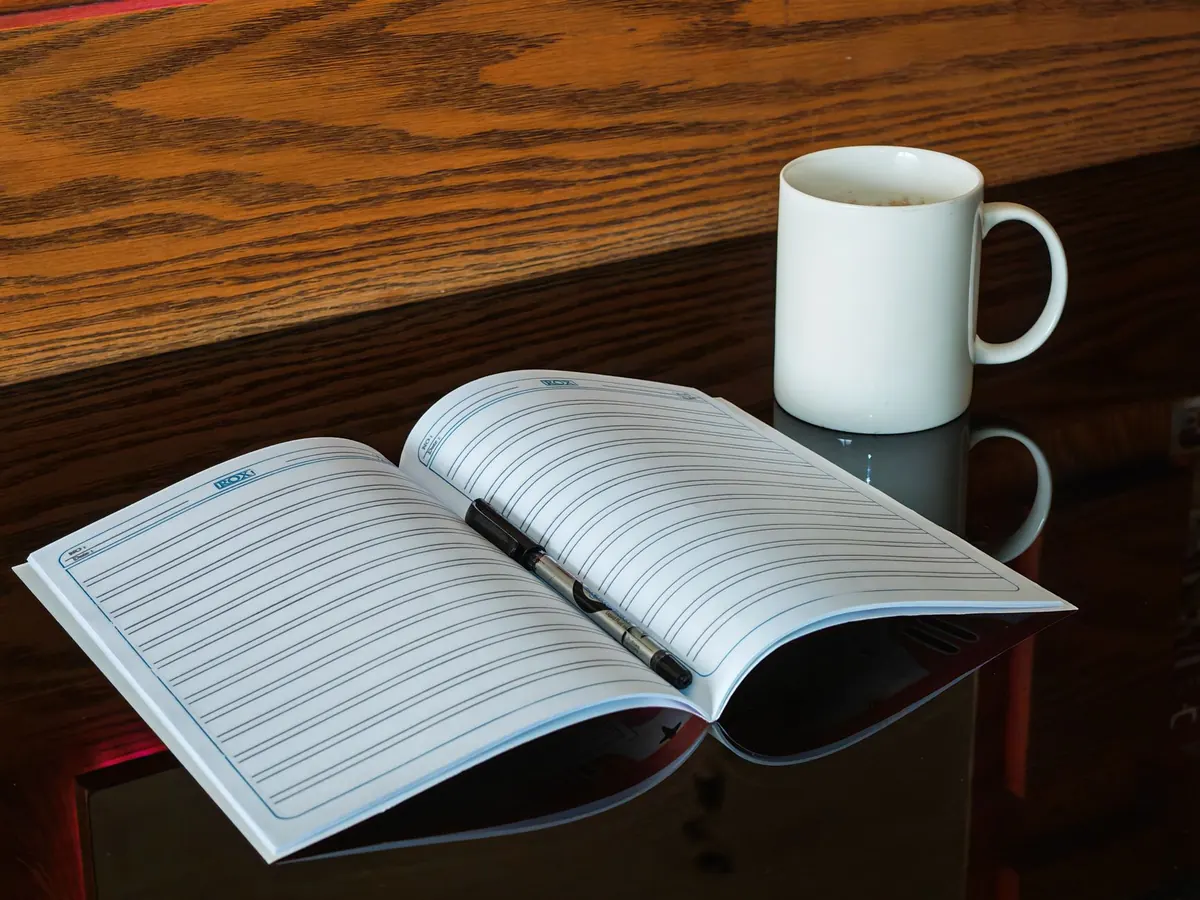
Before the coffee, before the phone, before the day starts asking things of you, there is a page. Three of them, in fact. Morning pages are the least glamorous creative practice going: longhand writing, done first thing, with no plan, no audience, and no expectation that a single line will be worth keeping. People who stick with it tend to describe a similar effect. The thoughts that were circling loudly at six in the morning look smaller once they're on paper, and something clearer takes their place.
What Morning Pages Actually Are
The practice comes from Julia Cameron's The Artist's Way, where it is set out plainly: three pages of longhand, stream-of-consciousness writing, every morning. That's the whole method. There is no format to learn, no prompt to choose, nothing to research before you start.
They differ from a journal in ways that matter. A diary is usually written with an eye on meaning: you reflect, you make sense of the day, you might keep it tidy because someone might read it one day. Morning pages are the opposite of tidy. Whatever is in your head goes down — a complaint about a colleague, half a worry about money, the shopping list, the fact that your shoulder aches, a sentence you overheard on the bus and can't stop repeating.
Nor are they a productivity system. You'll probably produce a to-do list somewhere on page two, and that's fine. But the task is to keep the hand moving, not to organise your week. The planning can happen later, with a different pen and a clear head.
The Basic Rules, Stripped Down
Most people who keep the habit for years end up with something close to this:
- Three pages. Standard notebook size, written on one side. Not three sides of a tiny notepad, not twelve of an A4.
- Longhand. Handwriting is slower than typing, and that slowness is the point: it keeps you closer to the thought as it forms, and you can't hit delete.
- First thing. Before email, before the news, before anyone else's voice gets in. If you truly can't manage that, early is better than late.
- No editing. No crossing out, no correcting spelling, no rereading the paragraph you just wrote. If you notice yourself composing, stop and write something dull instead.
- Keep the pen moving. If nothing comes, write "nothing is coming" until something does. It usually takes less than half a page.
- Nobody reads them. Not a partner, not a friend, not your future biographer. This is the rule that makes the other ones possible.
Three pages take most people somewhere between fifteen and twenty-five minutes. That's the honest cost. If that's too much on a given morning, see the adaptations below rather than skipping the day altogether.
What to Write When Your Head Is Empty
The first week is easy — there's a backlog. It's week three, when the obvious material has been used up, that people get stuck. A few things that reliably get the hand moving again:
- Describe the room you're sitting in, in detail, including what's wrong with it.
- Write out the thing you'd say to someone if saying it cost nothing.
- Copy down a dream fragment before it dissolves, however little sense it makes.
- Ask a question on the page and answer it in the next line. "Why am I dreading Thursday?" is enough to start.
- Write about what you're avoiding writing about. That sentence alone often opens the tap.
Dullness is not a failure. Some mornings you'll fill three pages with the weather and a list of things to return. The practice works through volume, not through insight.
The Struggles Nobody Mentions
"I don't have time for three pages"
Some mornings you genuinely don't. Write one page. Write ten minutes' worth and stop mid-sentence. A short session keeps the thread; a skipped one breaks it. What tends to fail is not the writing but the setup — phone in hand, notebook in another room, no pen that works.
"It's the same complaints every single day"
Repetition is information, not a sign you're doing it wrong. When a grievance shows up four mornings running, take it one step further: write what's underneath it, then what's underneath that. You'll either find something useful or get bored enough to move on.
"I feel worse afterwards"
Sometimes the pages turn up something heavy — a job you resent, a friendship that has run its course. That's the practice doing its job, but it can be uncomfortable before it's useful. If a session leaves you low, close the notebook and write one line about what you'd say to a friend in your position. If writing regularly keeps pulling you into the same dark place, stop and talk it through with a doctor or therapist rather than pushing through alone.
"I keep missing days"
Nobody's keeping score. A missed morning isn't a broken streak, it's a Tuesday. Leave the notebook open on the table with the pen across it, so the next attempt costs no decisions.
Simple Adaptations for Real Life
The three-page rule is a container, not a commandment. If you're a parent of small children, a shift worker, or someone whose mornings start at 5 a.m. with a commute, adjust the shape:
- One page instead of three, done properly, beats three pages you resent.
- Ten timed minutes, using a kitchen timer or an oven clock, with no goal beyond filling the time.
- Smaller paper. A pocket notebook's three pages are nothing like a full-size A4's.
- Evening pages, for anyone whose brain doesn't switch on before noon. Keep the same rules; change the hour.
- Digital, on hard days, with the spellcheck off. It's a compromise, not a failure.
Pick one variation and stay with it for two weeks. Switching formats every second morning is just another way of not doing it.
What to Do With the Pages Afterwards
Don't read them back for at least a month. Judging the writing while it's fresh kills the habit faster than anything else. When you do flip through an old notebook, read for patterns rather than prose: the same name appearing every few days, the same complaint, the same idea you keep dismissing. Occasionally you'll find a line that tells you exactly what to do next. Circle it and act on it that week.
Storage is worth a thought. Keep them in a drawer, or in a box nobody else opens. If the idea of anyone finding them makes you cautious on the page, shred them after a month instead. Privacy is what allows the honesty, and honesty is the only thing this practice requires.
Start Tomorrow Morning
Put a notebook and a working pen beside the kettle tonight. When you get up, before the phone, make a drink, sit down and fill three pages with no plan to be interesting. Don't read them. Don't show them to anyone. Do it again the next day.
Give it two weeks before you decide whether it suits you. Some people find it clears the noise out of the day; others find it dull, and that's a legitimate verdict too. Either way, you'll have learned something about what's actually going on in your head at seven in the morning — and that's rarely wasted.
Photo: Mahmoud Zakariya / Pexels