Ask someone why they stopped journaling and you rarely hear "I ran out of things to say." More often it's something small and specific: the notebook that felt too nice to spoil, a morning routine that grew from five minutes into a forty-minute project, a streak of sixty days broken by one busy week and then abandoned entirely. None of that is a character flaw. It's a design problem. A journaling practice is a system, and like any system it holds or collapses depending on how well it fits the life around it.
Below are the mistakes that show up most often in people who genuinely want to write regularly and can't quite manage it, along with the adjustments that tend to fix each one.
Mistake One: Believing the Page Has to Be Good
Perfectionism doesn't usually announce itself. It hides in small hesitations: the half-second pause before you write a sentence because it sounds clumsy, the urge to cross something out neatly, the feeling that today's entry isn't interesting enough to record. Add a handsome hardcover notebook and the pressure doubles — the first page becomes a debut, and a debut can be ruined.
The beautiful notebook problem
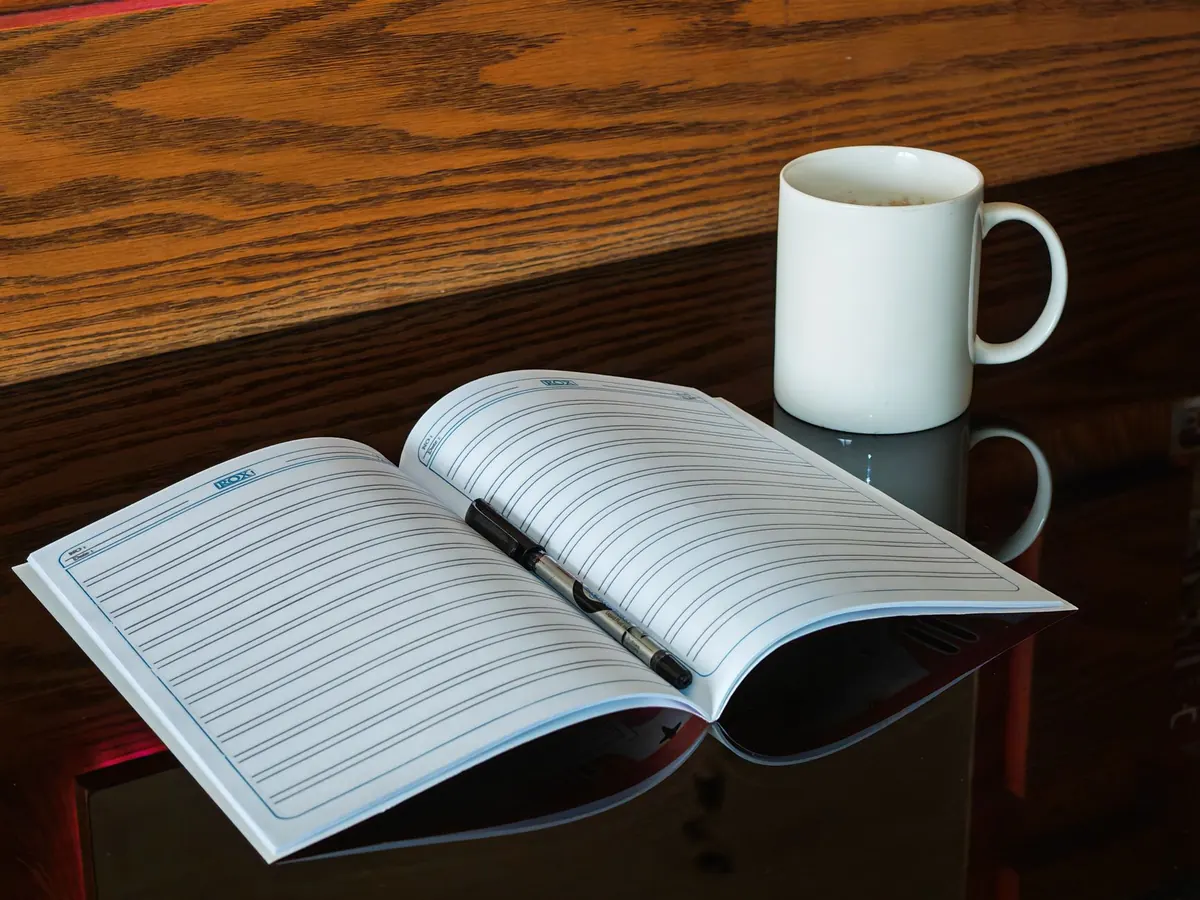
If your journal is too precious to spoil, it will stay empty. Two fixes work better than willpower. First, write on page two or in the middle; a broken first page removes the pressure to be impressive. Second, use cheap notebooks for everyday writing and save the nice one for something else entirely. Sloppy handwriting is allowed. Spelling is allowed to be wrong. No one is grading this.
Watch for these signs that perfectionism has taken over:
- You rewrite entries or recopy them onto fresh pages.
- You avoid writing until you feel "clear-headed enough."
- You skip days because nothing notable happened, then feel behind.
- You spend more time choosing a prompt than answering one.
Mistake Two: Building a Routine for a Person Who Doesn't Exist
Somewhere along the way, journaling got packaged as a lifestyle: twenty minutes at 5:30 a.m., a candle, a specific pen, three pages before coffee. If that's genuinely your morning, wonderful. For most people, it's a routine borrowed from someone with a different schedule, and it fails within a fortnight.
The repair is to shrink the habit until it's almost embarrassing. One sentence counts. Two minutes counts. A single line listing what you did and what's on your mind counts. Then attach it to something you already do without thinking: the kettle boiling, the commute settling in, the last ten minutes before lights out.
Time of day matters less than people assume. Morning writing tends to capture intention; evening writing tends to capture reflection. If you've failed at mornings twice, try evenings before deciding the habit doesn't suit you.
Mistake Three: Treating a Missed Day as a Broken Streak
Streaks are motivating until they're not. The day you miss becomes a small failure, then a reason to skip tomorrow, and within a week the notebook has migrated to a drawer. The all-or-nothing mindset is one of the most common reasons a practice that was going fine simply stops.
Instead of counting consecutive days, count weeks. A week with three entries is a good week. Adopt a simple rule that removes the drama: never miss twice. One skipped day is a schedule conflict. Two is the beginning of a pattern, and one short entry is enough to interrupt it.
It also helps to lower the entry bar for bad days. A single line — the date and one sentence — keeps the thread intact and takes less time than brushing your teeth.
Mistake Four: Writing for an Imagined Reader
Many journals stall because the writing is quietly performing for an audience: a future self, a biographer, a partner who might stumble on it. That awareness produces a stiff, formal voice — a written version of someone being polite at a party. It's exhausting, and exhausting things don't get repeated.
Write the way you'd talk to a friend who already knows the background. Use first names. Use shorthand. Skip the introductions and start in the middle of the thought. If the fear of someone reading it is what's holding you back, say so on the page; a private note about privacy is still a legitimate entry, and it usually loosens the next paragraph.
Mistake Five: Waiting for Something Worth Writing About
The habit gets treated as a crisis tool: pulled out during a breakup or a big decision, ignored the rest of the year. But a journal that only appears during drama never becomes familiar, and unfamiliar things feel awkward every time.
Everyday entries are where the practice actually lives. The specifics are the point: the terrible sandwich, the conversation on the bus, the thing your colleague said that you're still turning over. Ordinary detail ages well — six months from now, the small facts will tell you more about this season of your life than any summary of how you felt.
Mistake Six: Collecting Tools Instead of Writing
There's a comfortable illusion in buying a new notebook, downloading a third journaling app, or printing a hundred prompts. Preparation feels productive. It is not writing, and the search for the right system can quietly replace the practice itself.
Try a period of deliberate simplicity: one notebook, one pen, no new tools until the notebook is full. If you prefer typing, pick one document and keep adding to the bottom of it rather than creating a new file each day. Prompts are useful when you're stuck, not as a daily requirement — a page of freewriting usually gets you further.
A Practice That Survives a Bad Week
Consistency rarely comes from enthusiasm. It comes from making the entry small enough that skipping it feels sillier than doing it. Before your next session, settle these five things:
- Pick a fixed trigger — coffee, commute, bedtime — and write immediately after it.
- Set a floor of one sentence. Anything above that is a bonus.
- Keep the notebook in sight, not in a drawer or a bag.
- Count weeks, not days, and never miss twice.
- Write for yourself only: no editing, no recopying, no audience.
Give it three weeks before judging whether it works. The early entries will feel flat and the routine will feel fragile; that's normal and it passes. What you're building isn't a masterpiece. It's a place to think out loud, one ordinary page at a time.
Photo: Pixabay / Pexels